Prairie Outdoors
  • Email
  • Facebook
  • RSS
  • Home
  • Outdoors Blog
  • Campgrounds and Camping
    • Alberta Campgrounds
    • Saskatchewan Campgrounds
    • Manitoba Campgrounds
    • Camping Photo Contest
    • Country Building Photo Contest
    • Boats and Trailers
    • ATV and Snowmobile Rentals
    • Campground Reservations
  • Hunting
    • Wildlife on Camera 2026
    • Hunting Photo Contest
    • Outfitter Guides and Lodges
    • Buy Hunting Licenses
    • The Campfire
    • Our Favorite Places
    • Know Your Species
    • Saskatchewan Whitetail and Mule Deer Seasons
    • Deer Antler Scoring Whitetail and Mule Deer
    • Scoring Your Black Bear Trophy Skull
    • Moose Antler Trophy Scoring
    • Hunting Dogs
  • Fishing
    • Fishing Photo Contest
    • Buy Fishing Licenses
    • Fishing Camps and Lodges
    • The Campfire
    • Our Favorite Places
    • Ice Fishing
    • Pike & Walleye Weight Chart
  • Outfitters
    • SK Deer Hunting
    • SK Moose Hunting
    • SK Bear Hunting
    • SK Goose Hunting
    • Alberta Outfitters and Guides
    • Saskatchewan Outfitters and Guides
    • Manitoba Outfitters and Guides
    • Trip Finder
  • Hunts For Sale
  • Games
    • Outdoor Hangman
    • Outdoor Trivia
    • Outdoors Trivia 2
    • Survey – Broder Buck vs Hanson Buck
    • Survey – Fishing – Keep or Release
    • Survey – Fishing – Lefty or Righty
    • Survey – Shotgun for Geese
    • Survey – Fishing – Pike vs Walleye
    • Survey – Fly Fishing vs Spincasting
    • Survey – Upland Birds vs Waterfowl Hunting
  • Advertise
    • Advertise Your Outfitter Business
    • Advertise Your Campground
    • Outdoors Web Site Development
    • Sponsor Opportunities on Prairie Outdoors
    • Advertise Your RV Dealership
  • About
Search the site...

Beyond the Purchase – Some Other Costs of Snowmobile Ownership

March 3, 2026 / galen / Life at the Cabin, Outdoors, Snowmobiling

The Cost of Snowmobile Ownership. It’s well beyond the purchase price or finance payments. Like anything that moves, has an engine, and is designed for recreation, there are additional costs. Most of them quite obvious, I think, but here’s what we have encountered.

Clothing & accessories. We were fortunate to already have a good supply of winter wear, ski pants, warm gloves, boots, etc. and 2 helmets we bought for quadding. I do dome ice fishing so I have a good idea what clothes are needed for a Saskatchewan winter. The only thing that we really were missing was goggles. My old ski goggles were not in very good shape so a $40 investment and we were all geared up. We could upgrade some gear. Our snowmobile has a plug in cord for a heated visor. We could buy a couple helmets with that feature built in. My neighbour has one. Sure looks handy. $200 – $550. I do strongly encourage the use of a base layer system, what we used to call long underwear, but now it’s more technical. I have mine from hunting. They are thin, light, and make a very noticeable difference. An inexpensive set for both top and bottom can be found for $50 – $60.


Gas. The owners manual says to use 91 octane (premium).  That was $33 for a jug of gas last weekend. An extra gas can. This seems like a good idea, especially as most snowmobile riding is going to occur away from roads and further from a gas station. Running out of gas would make for a rather lengthy trek to the pumps.  A brief search lead me to a few name brand accessories including accessory brackets and gas cans for a bit over $300. As one of the reviews on the product said, “Expensive, but what accessories aren’t!”. If we get into some trail riding, we may have to dig into our wallets for these. Once we buy a second snowmobile, I think we will just carry one emergency gas can.

Maintenance / repairs.  Replacement of one of the scratchers was my first repair. I broke one in reverse. I knew to put these up before backing up, but didn’t. I found a pair at Canadian Tire on clearance for about $20. Normally these sell for $40 to $60 a pair. I learned in this case, that universal is not universal as a replacement if it doesn’t match the original. The original was  also an aftermarket accessory and they have slightly different spring hole placement locations. Just enough to need a little bit of a field fix, but we got the new one installed.


When things go wrong: spark plugs. This weekend was planned to be a weekend of riding with others. One of my sons was already out at the cabin and I joined him to do some riding. He just completed his SK Snowmobiling Safety Course so that he can ride legally. The cost of this course is only $50 and can be done online. See more at sasksnow.com/safety/. His comments about it were that is was a lot more practical than the Canadian Safe Boaters Course which has a ton of maritime regulations which are not very applicable to land-locked Saskatchewan. There was some fresh snow so we were expecting a few good rides. We fired up the snowmobile and let it warm up then I went for the first ride. The sled was very boggy, very underpowered, like it was over-choking, or some other similar problem. Just no power that I knew it had. I went for a short run and then let my son ride and I could tell something was not right. I waved him over, shut it off, restarted, and suddenly the power was back. We rode for a while, taking turns, took a break for lunch and the power problem was back. After a few shut down and restarts, it was running good again. The next day I went for a good ride, but had to go through the shut down and restart again to regain full power.

Making Tracks:

When it was at full power, it was a great ride. The next day, Saturday, was a day I had been looking forward to for a few weeks. My neighbours have sleds and he has a farm a few miles from our cabins and we were going to go riding together in the hills near his farm. I was very much planning for a great day of exploration and some fun with my neighbour / friend. His machine ran great, mine didn’t make it more than a 1/4 mile from the cabins when it started bogging down again and actually stalled. I managed to limp it back to my cabin while he carried on and went to play in the snow. After some pondering, as well as discussing the performance issues with my neighbour, we are making a guess that I have one if not two faulty spark plugs and when it is running on low power, it’s only running on one cylinder. I have searched for the symptoms of snowmobiles running on faulty spark plugs and the Internet supports the idea that changing plugs will improve performance. I had a similar low power issue with my boat last spring and fresh set of plugs brought the boat back to full power. The cost of two new spark plugs are less than $20 so as a maintenance expense, pretty minimal.

Heading out for a ride:


A young Mule Deer follows the tracks:

Registration. If you plan to access any public lands, such as lakes, ditches, trails, then registration is required. It’s quick and simple at sasksnow.com/registration/. The cost is:

  • $150 registration fee per year
  • $79 (pro-ratable) insurance premium

Transportation / trailering. We have not made the plunge to a snowmobile trailer. Although, as soon as you have a trailer, you start to think about other good uses of it. Our mid-term plans are that we will buy another snowmobile in fall along with a trailer. Then we can haul the sleds to the trails or go to poker rallies. You can buy a hotel on wheels for your snowmobiles for $45,000 down to a used flatbed snowmobile trailer for about $2500 or a bit less, as low as $1000 for a used flatbed trailer, not specifically designed for snowmobiles.

Some accessories are just not necessary. Our snowmobile came with a storage pouch mounted on the center of the handlebars. It would be a handy place to store a few small items, but there is storage just behind the seat as well. It is also in the perfect position to block the display including the speedometer and temperature gauge. It’s been removed.

Things I am Learning About Snowmobiles – Part III

February 22, 2026 / galen / Life at the Cabin, Snowmobiling

Put up the Scratchers. I learned this the old fashioned way, through experience. After going for a ride on the lake with the scratchers deployed, I rode back into the yard, and reversed into a spot to park. Then I remembered the scratchers were down. Left side, under a little stress and maybe bent slightly. No problem, can bend that back into shape. Right side, different story. It was only half as long as it should be. Yep, I snapped that one. The good news, i found a set of universal scratchers at Canadian tire at 65% off, only $23 and before next ride it’s a simple one socket wrench job to replace the broken part.

Headlight aiming adjustment wheel.  I have glanced through the owners manual. Read the important parts, but after several rides, I was still left wondering what this adjustment wheel was for.

It’s the headlight adjustment wheel. Spin it left or right to lower / raise the angle of the headlight. I haven’t riden at night yet so that’s a feature for another day, or night.

oil

Fuel grade (91 octane). This part of the manual I did read. It recommends a 91 octane fuel, and not to use ethanol fuels. Same stuff I use in other toys so the gas left over from summer in the jugs is good to go.

The windshield. I remember on our old Polaris we had when I was a teenager, we had a full height plastic windshield, we broke that a few times and paid our of our own pockets to replace it. That was not something our dad was willing to foot the bill for. I don’t remember ever paying for gas so I guess had the good end of the deal. It was always difficult to see through. This Polaris has a lower windshield, actually no windshield. Good goggles and that doesn’t seem to be any worry.


Speaking of goggles,  invest in a good pair of anti-fog, goggles. They are well worth the convenience. I tried an older pair and had problems with fogging and had to pull them down. Okay for a short ride but if it was snowing, that would have been a problem. My snowmobile also has a heated face shield wire. I don’t have that feature on  my helmet so maybe something to consider for a future helmet upgrade. While this feature sure sounds like a luxury, I’m it would be well worth the convenience.

As I am learning, when you head out and go for a longer run in the countryside or down the lake a few kms you want a machine and gear you can trust. It wouldn’t be fun to be stuck a few kms of deep snow away from the cabin in -20 C temperatures with a little Saskatchewan windchill to with the walk.

Things I am learning about Snowmobiles – Part II

February 15, 2026 / galen / Life at the Cabin, Snowmobiling

With each time starting my snowmobile and each ride I learn a little more and get a little more experience. Now the idea of hitting the throttle is not quite so unknown and I am getting a better feel for how the machine handles in different snow conditions. I haven’t has the chance to ride in fresh powder or on groomed trails yet. Hopefully that will happen this winter still. We have had a terrible stretch of plus side temperatures which have melted a lot of snow and turned the remaining snow to hard packed and crusty. The forecast shows the weather turning to more central Saskatchewan mid-February weather so really hoping the snow in the forecast brings us a good foot of powder to play in.

But first, the dogs love to run loose out on the lake.

http://prairieoutdoors.com/wp-content/uploads/2026/02/dogs-on-the-lake.mp4

I also like to take them for a run out here so they can burn off some energy before I go for a ride on the snowmobile. Then they can sit on the deck and watch.

Now, before starting, the pre-ride check list of all the important things. Gas, coolant, oil, and then ensure the skis and track are free from being iced in and stuck.

Oil
Coolant
Skis

Gas
Track

Electric vs pull start, we are only part way into the learning on this one. My used snowmobile was bought with electric start, but the owner had never installed a battery. So, it’s there, if I want to add the battery. Fortunately, the batteries from my SeaDoos, sitting on a shelf in winter, will do the job nicely. The pull start works just fine for me, a couple pulls and it starts. But the pull start is too hard of a pull for my wife, who has a shoulder with a habit of popping out. So, either I do the pull, or we put in a battery. I already have the battery, so may as well give that a try and see how much we appreciate the convenience.

Track Paddles come in various sizes. I have also heard them called lugs. I don’t have much to compare to but mine came with 2-1/2″ paddles. So far I haven’t found any snow to deep to get traction. That includes a ride today through some ditches with some very deeply gathered snow. In the summer, the ditches are about 3 feet below the level of the road. The snow is currently even with the road.

Coolant. Some sort of cooling method is obviously important for any engine that will be running for a extended period of time. My owners manual recommend pre-mixed with a ratio of coolant to water of either 60:40 or 50:50. Reading the manual, there is more to the engine cooling than just maintaining a coolant level. You also need some snow throwing on the track which in turn is used to cool the coolant. Get too hot and you can actually boil off the coolant.

My buddy, who has owned snowmobiles for many years and rides in the same geography as me, recommended a 144″ or 144″ track length. That’s what I started shopping for, but found they are quite hard to find. Many 163″ track lengths, but those are primarily designed for mountain riding. Not many mountains in site around here. The 155″ track length seemed pretty popular and some research identifies this length as a cross-over. Shorter is more maneuverable. Longer is better deep snow traction. The 155″ is right in-between.

Hand Grip Warmers seem like they will be a nice feature. All the days I have been at my cabin and gone riding so far this winter have been at coldest -10 C so the warmers have been in the low position. Not really cold enough to need them at all with a decent pair of ski gloves on my hands. Living in Saskatchewan, I anticipate there will be a day when I find these a great feature.

Hand Grip Warmers
Warmer Hi – Off – Low switch

Things I am Learning About Snowmobiles – Part I

February 9, 2026 / galen / Snowmobiling

Please realize I am still a novice so these may not all be correct but they are as I understand them. For the experienced out there, these may seem trivial, but for inexperienced, they are all new. As a recent new owner I am learning about snowmobiles.

I only learned of scratchers while searching to buy snowmobiles online. Many adds talked about scratchers. From I learned searching these online, Ice scratchers are installed to the rails of your rear suspension with one on each side.  These scratchers have a sharp tip that digs into solid snow pack and ice to create a “snow dust”.  They loosen the snow and ice chunks as you ride. Then, that loose snow is thrown up into the rear suspension. This throwing snow and ice spray onto the tunnel heat exchangers and suspension components helps cool both the track and the engine.
I learned how useful these are on the first few rides out on the lake. Recent warm temperatures had caused the snow to settle and was hard packed.  I had the scratchers up and the engine ran very warm, very much above normal ranges. I let it cool down, dropped the scratchers and it was a much better temperature range.
Scratchers are easy put lower and raise again when you are done. Looking them up online, you can get a pair for under $50.

Scratchers retracted
Scratchers deployed

Carbides or wear bars provide for far better steering control. Looking at the bottom of a snowmobile ski there is a metal rod on the bottom of each ski, the wear bars (a.k.a. skegs or runners). On the leading edge are the wear surfaces with sharp edges mounted on the bottom of these rods which are the carbides. When riding on ice or hard packed snow, these pieces cut into the surface and keep the skis from uncontrolled sideways sliding, improving your steering control.

Wear bars
Carbides

I’m glad the previous owner made a big deal about being a stickler for engine warm up time. He claimed he always let it warm up to 110 before he hit the gas. Searching the manual specifically for this it is a strong point in in that document as well. Spending the extra time to warm up the machine can prevent engine damage. Time well spent it would seem.

Started
Almost Ready
Time to Ride

OMG power! My previous riding experiences were on a 1982 Polaris, the smallest one, and an Arctic Cat 440. There was a significant difference in the power and speed of the much more powerful Artic Cat. Now, on a machine built 30 years newer, a Polaris 800, the power is is beyond what I had anticipated. When I went for a test drive of the used sled I bought, I asked the previous owner to take it for a run and show off some of what it can do. He was a big man, 100 pounds bigger than me, and he had that machine doing wheelies at ease. When I hopped on for my own test ride, and also going for my first rides, I had no need to gun the throttle, it had plenty of power and the OMG power still in reserve.

Why pay for registration? If you own an endless range of your own private land, or along with neighbours, you have all the range you need/want, then you really don’t need to register you snowmobiles. But if you are like the rest of us, and you are planning to ride outside of private land then you register register, as per the Saskatchewan Snowmobile Association: from SaskSnow: Under The Snowmobile Act, you must register the snowmobile before you can ride it on public roads (where allowed), ditches, other highway rights of way, provincial parks, Crown land, designated snowmobile trails or on rivers or lakes. Registration isn’t required to drive snowmobiles on privately owned land if you have permission from the land owner or tenant. Out of Province snowmobiles must carry valid registration and insurance as per the laws inside their home province or state.

The First Few Rides on My Own Snowmobile

February 3, 2026 / galen / Life at the Cabin, Snowmobiling

New Found Winter Freedom

We now have the first few rides on our own snowmobile under our helmets. The overwhelming conclusion for both of us was “let’s do more of this!”. No doubt in my mind that we will buy a second snowmobile so that we can ride together and journey a little farther, to the ditches, fields, and hills in the surrounding countryside. Our neighbours, who are from the area, have already offered to show us some of the good spots to go.

We have found that driving on the lake is bumpy, with hard packed snow. I am sure this is simply a result of the warm weather spell we had in January when there was some melt and settling of snow.

Running hot was an issue, with engine temp climbing well above normal. I put the scratchers down which helped. I went online and read some forums and this is not uncommon so I was relieved that the machine was simply acting normally. The next day after some overnight snow we ran in some fresh snow and temperature was normal.

If you have a look at a couple of the videos below, I realize for the hard core snowmobilers out there that these pics and videos are pretty unimpressive but I will go back to classifying us a Novice riders on a machine with far more power than either of us have ever ridden so we are starting off with a light thumb on the throttle.


http://prairieoutdoors.com/wp-content/uploads/2026/01/CabinFront_2026-01-28T17_07_26.mp4
http://prairieoutdoors.com/wp-content/uploads/2026/02/snowmobiling_0019.mp4
http://prairieoutdoors.com/wp-content/uploads/2026/02/snowmobiling_0009.mp4


Transporting a Snowmobile

January 31, 2026 / galen / Snowmobiling

I learned something today I was not expecting, the skis on a snowmobile are wider, and sharper, than I had thought. That sounds a bit like the start toa story of things gone horribly wrong. It is not. I bought my first snowmobile this week and a buddy who was borrowing a snowmobile trailer from another buddy helped me pick it up.

When I backed the snowmobile off the trailer into the garage, I noticed the marks it left on the concrete of my driveway and garage floor. The “runners” or carbides on the underside of the skis are quite sharp. A couple of “drag” marks on the concrete don’t have me at all concerned. I understand now the dual function of the “runners” on snowmobile trailers, provide grooves for the carbides and keep the flat surface of the skis from freezing to wood.

The next step in my adventure is to transport the snowmobile to our cabin where we will do 99% of our riding. My plan was, put down a sheet of OSB to protect the truck bed and load it into the back of our Chevy Colorado by driving it off our driveway snowbank, winch it tight, and away I go. I will find another snowbank or snow pile at the other end to unload. I measured the skis to see how wide I needed for the OSB, maybe something I have already will work. The skis, outside to outside are 46 inches. The wheel wells in the bed of the truck are 45 inches. Missed it by that much.

The fortunate news is I have my son’s truck for the week, a Chevy Silverado, with a full 48 inches between the wheelwells so I will use that, with a full sheet of OSB. I don’t care if the carbides damage the OSB. I’m willing to sacrifice the $15 for not scratching his truck. We don’t plan to be hauling the snowmobile around the countryside so this is a single trip requirement, until we buy another machine.

Without proper ramps, I needed a way to get the snowmobile high enough to drive onto the truck bed. With a Saskatchewan winter halfway behind us, the snow pile from clearing my driveway was more than high enough and firm enough. Drop the tailgate, place the OSB, back up to the snow pile and drive on.

Add some winch straps to secure the front and back and we are good to drive to the cabin.


Then just find a convenient snow pile on the road. Back off, and drive the snowmobile to it’s new home at the Cabin

The Perfect Forecast Not Required

January 24, 2026 / galen / Life at the Cabin

Before we owned a cabin, we looked forward in somewhat nervous anticipation at each summertime weekend forecast. Looking for that “perfect forecast” so we could make a day trip to a nearby lake with the kids, and the dog, and the boat. Too much wind, too cloudy, too cool, possible storms in the afternoon. All of these could ruin the perfect forecast and prevent a “perfect day” at the lake. Sometimes we made the trip anyway and an unperfect forecast still led to some pretty fun days.

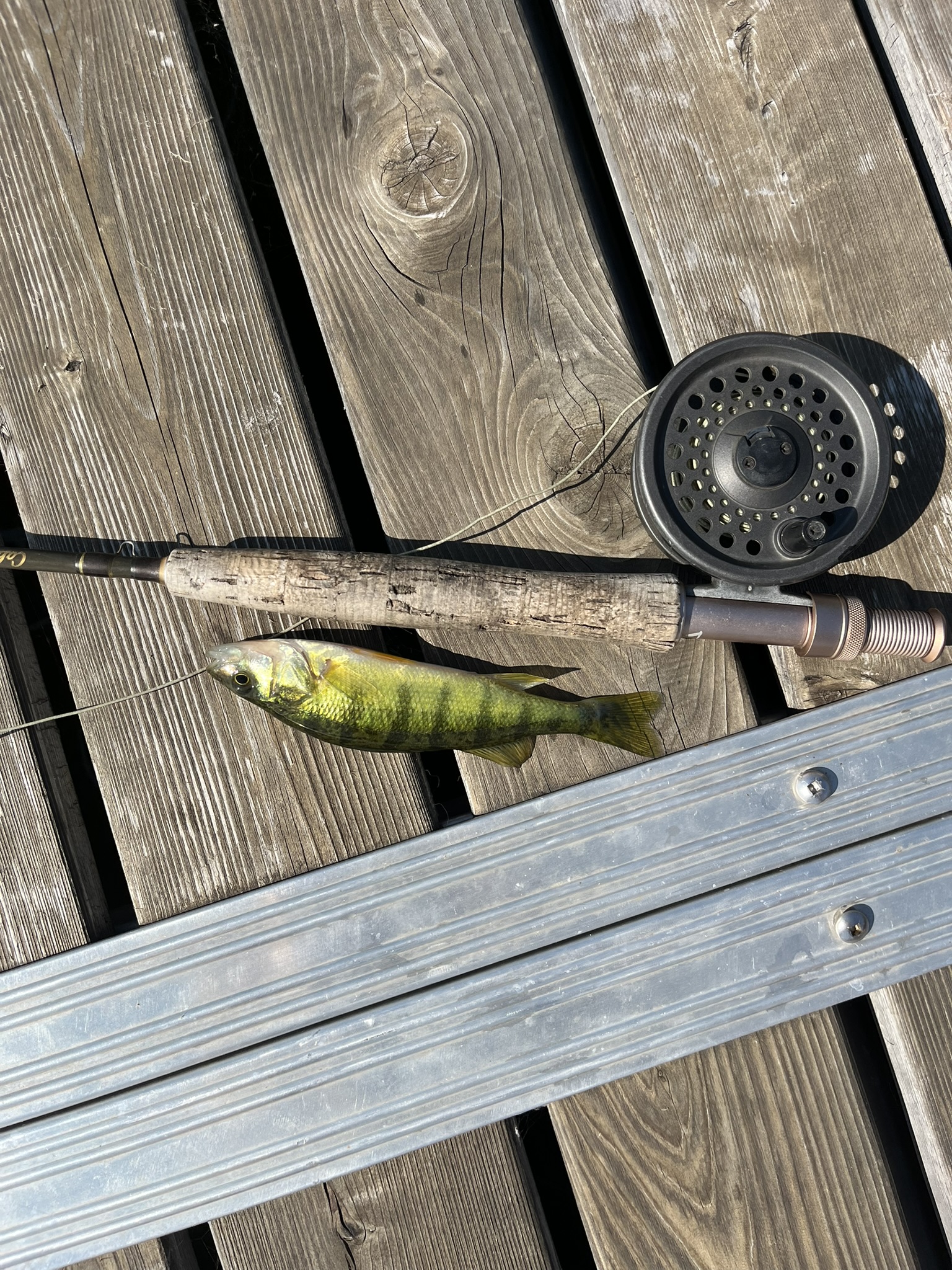
Then we bought a cabin and the whole outlook changed. We no longer need a perfect day or a perfect forecast. Even on a bad weather day, there are often breaks in the weather when we can get outside and enjoy the outdoors. If it’s raining, sit under the awning or the umbrella. If there is a short break in the rain, go down to the dock and catch a few perch on the fly rod. A half hour break in the clouds and that’s plenty of time for a run on the Sea-Doos. Even when its a bit windy, there’s calm water somewhere and one can move chairs to the opposite side of the cabin for a wind break, or sit down in the firepit area surrounded by trees.


Winter gives us a whole new set of activities. Walks along the trails and gravel roads, ice fishing, building a rink on the lake, snow tubing down the hill and out onto the ice. When it’s a little on the colder side, a step inside the cabin to warm up and maybe a hot chocolate can fuel you for some more brisk outdoor activities. On some winter days we have built a fire and enjoyed our beverages outside. Even the wildlife seem to a part of the fun.


Give us a day of perfect weather and we have all we could hope, the weather and the time to do anything we want, to have a perfect day. But that doesn’t stop us from having great days, with activities mixed in to match what the weather gives us.

We Are Snowmobile Owners

January 21, 2026 / galen / Life at the Cabin, Snowmobiling

Finally found the snowmobile that was right for us, for the first one, we believe. I had an alert set for a year range and price range on Kijiji and one that looked promising popped up Monday morning. I contacted the owner right away and quickly had an appointment to be the first one to look at it.  For the test drive, I asked the current owner take it for a run so I could see what it can do, with someone who knows what they are doing at the controls. Then I took it for a test ride as well. The owner was a bigger guy than me so I could see it would have no shortage of power.

After watching the used for sale listings for a month or so, it was pretty obvious I would have to compromise in a few ways. I ended up at the very bottom range of model year. This one is a 2012. But it has relatively low mileage, under 2000 km. Ideally I was looking for a 144″ track and settled on a 155″. It’s considered a cross-over model so that makes sense and a buddy who rides a lot says he knows many happy 155″ owners. This one came fairly well accessorized.  Scratchers, heated handles, reverse, electric handles, and electric start (just add a battery). I was willing to go with a 600 engine model if the right opportunity came about but this one is an 800 so the only question is will this be too big. Perhaps the second one we buy will be a 600 and then we can compare.

Our next step is get it into our truck and unload at the lake and take it for a first ride. For the next couple days it will sit in the garage.

After doing a quick inventory of winter wear accessories we are short a couple pairs of goggles. That should be an easy solution.

Buying a low-mileage used snowmobile is a low-cost entry into the sport, with little or no financial risk. Snowmobiles I saw listed were being sold within the week so if we decide that this is not for us it should be pretty simple to get our money back out.


1 Snowmobile vs 2 Snowmobiles

January 19, 2026 / galen / Life at the Cabin, Snowmobiling

Should we buy 1 or 2 snowmobiles?

That is the current dilemma. We know that if we are going to get into snowmobiling, we will eventually need 2 machines, but can we do a successful test with just 1 machine? My wife has limited weekends available this winter to go to the cabin and go riding. I have much more flexibility. It’s mid-January and we have not yet looked at a snowmobile in person, let alone bought one (or two) and take it (them) for the initial ride.

Down the road, and into retirement, if we have snowmobiles, we expect we would have ample time to ride and time to venture out on the nearby trail system and take part in poker rallies. The winter fun activities that our Province affords us.

When we bought Sea-Doos a few years ago, we right away bought 2. “Best purchase ever” says my wife. I guess that means she like the Sea-Doos more than her wedding ring? I’m ok with that. We are hoping that snowmobiles will be the winter equivalent.

As mentioned in my last post, neither us us are brand new to riding, but given the lack of recent experience, I am classifying us as newbies, but not snowmobile virgins.

We made a list of Pros and Cons of the 1 snowmobile vs 2 snowmobiles dilemma.

Cons:

  • double the cost of purchase, maintenance, gas, etc.
  • we can take turns

Pros:

  • double the fun
  • couples outings
  • trail rides
  • poker derbies
  • more reasons to spend days at the cabin in the winter
  • rides with neighbours and friends
  • more reasons for more family gathering at the cabin

As you can see above, without adding any scaling to the pros and cons, the Pros greatly outweigh the Cons. I am sure, assuming the initial testing of a snowmobile puts smiles on both of our face, we will be on the trails to two snowmobiles, not one.

Adventures of Novice Snowmobile Riders – The Beginnings

January 13, 2026 / galen / Life at the Cabin, Snowmobiling

We are thinking of becoming snowmobile owners, my wife and I. I would call us Novice Snowmobile Riders, but not absolute newbies. We both had snowmobiles growing up. My family shared a Polaris something. It was the smallest engine they made back in the early 80’s, likely a wise choice by my father as I’m sure we were a bit reckless. Growing up outside the city limits of Brandon, Manitoba, we had plenty of snow and plenty of open territory and often my brother and I would set up a course and have timed races, one at a time. Sometimes we could borrow the neighbour’s Artic Cat El Tigre. I believe it was a 440 and much faster than ours. My wife grew up with a family cabin at a a lake south of Swift Current, Saskatchewan and a family friend had a Yamaha store so there was a ready supply of snowmobiles and dirt bikes to play on for her and her two older brothers, but sometimes the SK snow pack was a little thin so the riding could be bumpy. [add old images of pics if any]

Now the times and technology definitely have changed. The last time either of us were on a snowmobile was at least 15 years ago. We have friends and neighbours at the lake that have snowmobiles and we are eager to join them on the winter trails. But first we need to make a purchase or two. As we are still a few years away from retirement, we do not want to over invest and have them sit idle, parked in a shed at the cabin. We want to make an affordable entrance into the world of snowmobile riding and gauge how much time we have for the next few years. So, new is off the books and we are considering just a single machine for this winter then one more in the fall. She has a limited number of weekends available this winter so two machines may be overkill. I have a much more flexible schedule to go riding as well take the snowmobile out to the ice fishing spots.

We are definitely newbies when it comes to the purchase of snowmobiles. As I scour Kijiji and AutoTrader, it is quickly evident there is nothing for me on AutoTrader but a pretty good selection on Kijiji. I am faced with the newbie overload of information, specs, dimensions, options, packages, features. So I have turned to an expert to sort out some of the terminology. A friend of ours has a few snowmobiles and is an enthusiastic gearhead, lots of mechanical knowledge. With his help I have begun to understand the differences between between snowmobile types: mountain, trail, crossover. I have no known plans to head to the mountains to ride so the longer track mountain machines are off the list. Our riding will be ditches, fields where we have permission, frozen lakes, and some groomed trail riding. Engine size, heated visor plug-in, electric start, reverse, heated handles, lugs, track length, kilometers, so many things to consider and the tradeoff of $’s for options. I also have done a few Google searches and asked Chat GPT a few questions to ensure I understand a few things better. I did learn that Ski-Doo has about 50% market share, followed by Polaris with about 30%, Arctic Cat in 3rd place, Yamaha a distant fourth. Given plans to buy used machines, we want to stick to the top two brands to ensure availability of parts in the future if/when repairs are needed.

50%

30%

15%

10%

We don’t think we are adrenaline junkies but we are not putt putt drivers either. If the way we ride our Sea-Doos is any indication, we will gradually trend towards some more aggressive driving, but not maniacs. So we want machines with enough power to have fun and maneuverability for turns.

As of today, I have enquired about a couple of snowmobiles a Ski-Doo and a Polaris, both sold quickly, so I have not been out to “kick the tires” or “kick the skis”.

123›»

Recent Posts

  • Beyond the Purchase – Some Other Costs of Snowmobile Ownership
  • Things I am Learning About Snowmobiles – Part III
  • Things I am learning about Snowmobiles – Part II
  • Things I am Learning About Snowmobiles – Part I
  • The First Few Rides on My Own Snowmobile

Categories

  • Bear Hunting
  • Camping
  • Deer Hunting
  • Duck Hunting
  • Fishing
  • Fly Fishing
  • Goose Hunting
  • Hunting
  • Ice Fishing
  • Life at the Cabin
  • Outdoors
  • Snowmobiling
  • Uncategorized

Subscribe to Updates

Subscribe to our Posts